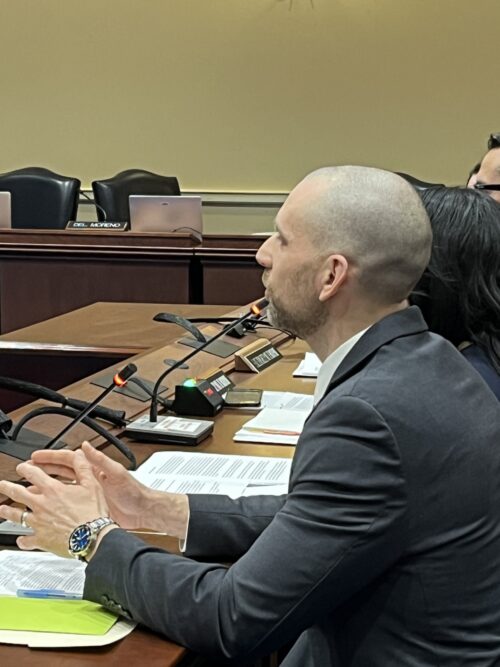
Luminus Testifies to Support UNITE Act in Maryland Legislature
Thank you for the opportunity to testify in favor of HB923, the UNITE Act. The General Assembly has previously seen it fit to grant the equity courts of this state jurisdiction over motions for Special Immigrant Juvenile Status (SIJS). SIJS is an important immigration protection that applies to minors who were abandoned, neglected, or abused by their parents prior to the age of 18. If a court of competent jurisdiction exercises its authority over a custody or guardianship petition concerning such a minor, and pursuant to a motion for SIJS factual findings, determines that it is not in the best interest of the minor to be returned to their country of nationality or last habitual residence, then that minor may apply to the United States government for SIJS protection. Once obtained, generally after a few years, this special immigrant status allows the minor to apply for permanent residence in the United States, and eventually to apply for citizenship as well.
The jurisdiction of Maryland’s family law courts over SIJS motions is codified in the Family Law Article, section 1-201(b)(10). This statutory provision evinces the General Assembly’s intent that the courts of Maryland overseeing custody matters adjudicate motions for special immigrant juvenile status and place minors on the pathway to special immigrant status. Unfortunately, certain courts have frustrated this intent of the Legislature by introducing requirements in SIJS cases that are nowhere to be found in either the Family Law article nor the Maryland Rules of Civil Procedure. The effect of these requirements is all too often to close the doors of the court on minors seeking this important protection and immigration benefit.
These requirements include identification requirements which are not required in custody matters not involving immigrant children, as well as affidavits from the petitioner and any minor 14 years of age or older that are also not required in non-immigrant custody matters. The effect, even if unintended, of the affidavits is largely to drive up the costs of these proceedings for custody petitioners, since lawyers now have to prepare additional documentation that would not otherwise be required in a custody matter and must, naturally, incorporate the additional time expended into the pricing structure of their services. This is functionally a regressive tax on immigrant families seeking custody of vulnerable minors.
While this impact of the affidavits is highly problematic, the effect of the ID requirement is more dramatic unfortunately. Many immigrant minors cannot obtain a passport, or a state or school identification. When this happens, their custody matter grinds to a halt and they are excluded
from the possibility of obtaining the grant of custody or the factual findings necessary for them to apply for SIJS protection. This frustrates the intention of the Legislature, which granted jurisdiction over SIJS motions in custody proceedings to the Maryland courts precisely so that
vulnerable immigrant minors would have a clear pathway to special immigrant status.
The UNITE Act corrects this by, first, ensuring that in custody proceedings, only the same types of documents required in a non-SIJS matter, may be required of petitioners seeking custody or guardianship of immigrant minors. Second, the UNITE Act corrects the effect of the identification requirement by restoring what was previously the status quo, namely the ability to establish the identity of minors with the filing of a birth certificate or other reliable evidence.
In fact, this is still the status quo in many Maryland jurisdictions, and the UNITE Act ensures that individual counties cannot subject immigrant families to unique and burdensome requirements that they would not face in other parts of the state.
To ensure that immigrant minors have a clear pathway to SIJS protection, I respectfully request that you vote favorable on HB923.